Story Worth Keeping · Ritual
For 200 Years, an Auction Ended When a Candle Went Out
Long before the gavel, London sold ships, land and paintings 'by the candle' — an inch of wax was lit, and the bidding ran until the flame died. Whoever spoke last, won.
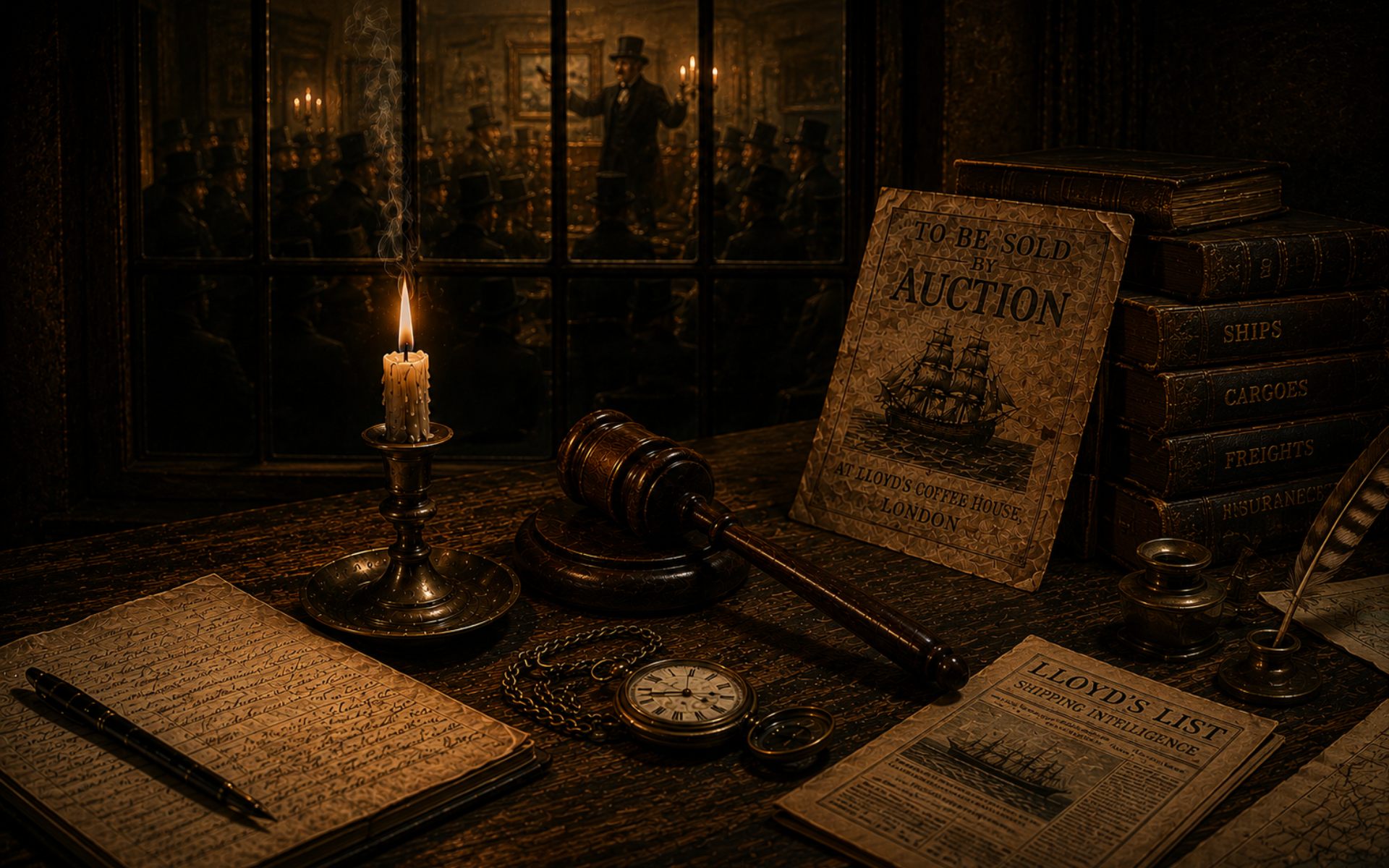
The candle was never measuring time. It was measuring nerve.
What Actually Happened
An inch of candle was lit and the auction began.
Bidding ran for exactly as long as the flame did. Whoever spoke last before the light went out owned the thing on sale — ships, land, paintings, entire cargoes, all decided by a burning wick.
The genius was that nobody could know exactly when it would end.
That was the whole point. There was no clock to game, no closing time to bid against at the last second. In 1652, John Milton called sale by candle the most probable means of finding what a thing was truly worth — because a bidder who wanted something had no safe moment to wait for. You either bid now, or risked the dark.
Then someone found the flaw.
A candle flares slightly just before it dies — one last brightening as the wick collapses. Samuel Pepys recorded a bidder who had noticed. The man watched for that final flare, shouted his bid into it, and kept winning. Pepys, watching the room, caught the whole comedy of it: "How backward men are at first to bid — and yet, when the candle was going out, how they brawl."
The candle went, but the theatre stayed. Sotheby's opened in 1744, Christie's in 1766, and turned the burning-wick ritual into an institution. Ships were still being sold by candlelight at Lloyd's Coffee House into the 1800s.
Why It Still Matters
We think of an auction as a test of wealth — whoever has the most, wins.
The candle tested something else.
Because you couldn't time the ending, you couldn't play it safe. You had to decide, out loud, in front of everyone, whether you wanted the thing badly enough to speak now — with the flame low and no way of knowing if you'd get another chance. It didn't reward the richest bidder. It rewarded the one who could hold their nerve closest to the dark.
We replaced the candle with a clock, and the flame with a gavel. Both are cleaner. Neither makes you feel the thing the candle made you feel — that wanting something means deciding before you're ready, while the light is still going.
The candle was never really measuring the sale.
It was measuring you.